Day 3 of the Kenya International Investment Conference (KIICO) 2026 marked the conclusion of the Africa Green Industrialization Initiative (AGII) Forum, reaffirming Kenya’s commitment to accelerating Africa’s green industrialization through bankable, investment-ready opportunities.
The forum convened government leaders, investors and development partners to unlock investments in renewable energy, clean cooking, waste management, the circular economy, e-mobility and emerging technologies. It was graced by H.E. Deputy President Prof. Kithure Kindiki, alongside Deborah Barasa, Cabinet Secretary for Environment, Climate Change and Forestry; Ali Mohamed, Special Envoy for Climate Change; Abubakar Hassan Abubakar, Principal Secretary for Investment Promotion; Juma Mukhwana, Principal Secretary for Industry; Mutula Kilonzo Jnr; and Diana Dalton, Deputy High Commissioner at the British High Commission.
In his keynote address, Deputy President Kindiki, highlighted the role of catalytic financing in unlocking investment:
“We are deploying targeted instruments to de-risk early-stage investments and crowd in private capital, including a USD 40 million green investment facility under the Kenya Jobs and Economic Transformation (KJET) Project to unlock an additional USD 160 million,” he added.
The Green Investment Fund (GIF) is a blended-finance initiative aimed at accelerating Kenya’s green economy. The government has committed $40 million (Kshs 5 billion) in seed funding, which is expected to leverage an additional $160 million (Kshs 20 billion) from private and institutional investors through a fund manager, creating a total $200 million (Kshs 25 billion) fund. This capital will support priority green sectors, using commercially structured investments to reduce risk and attract long-term private capital, thereby promoting climate-aligned growth and job creation in Kenya.
He noted that Kenya is well-positioned as a low-carbon industrial hub, with 93% of its energy generated from renewable sources and called for the development of credible, bankable investment pipelines to attract global capital.
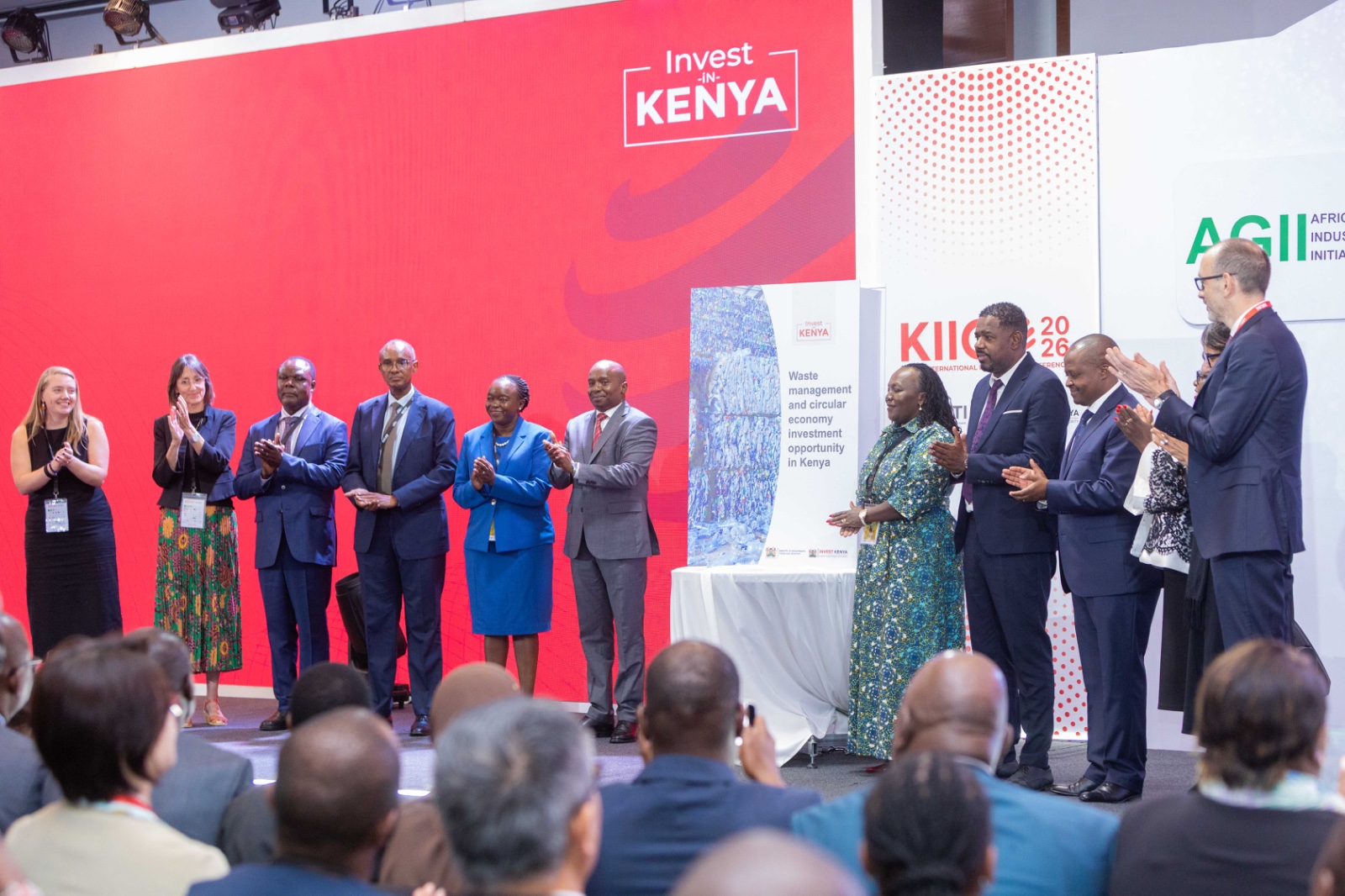
The forum also saw the launch of the Institutional Clean Cooking Sector Pack, presenting a pipeline of scalable, investment-ready projects across public institutions.
Cabinet Secretary Dr. Deborah Mulongo underscored the importance of strong policy frameworks in unlocking green investment:
“Creating an enabling policy and regulatory environment is fundamental to unlocking the full potential of the circular economy…,” she stated.
She highlighted key frameworks including the Climate Change Act, Sustainable Waste Management Act and Extended Producer Responsibility regulations as critical to enhancing investor confidence.
The AGII Forum underscored that achieving Africa’s green transition will require not only ambition, but deliberate action anchored in policy certainty, innovative financing and strong public-private collaboration. With a bold continental target to mobilize USD 100 billion for green sectors, the forum reinforced a shared commitment to turning opportunity into bankable, scalable investments. Kenya stands at the forefront of this agenda—open, stable and firmly positioned as a gateway for sustainable industrial growth—ready to partner with global and regional stakeholders to drive a greener, more resilient future for Africa.