
Kenya’s Green Investment Fund Dialogue Secures Pension Sector Support, Sets Stage for Billion-Dollar Green Finance Drive
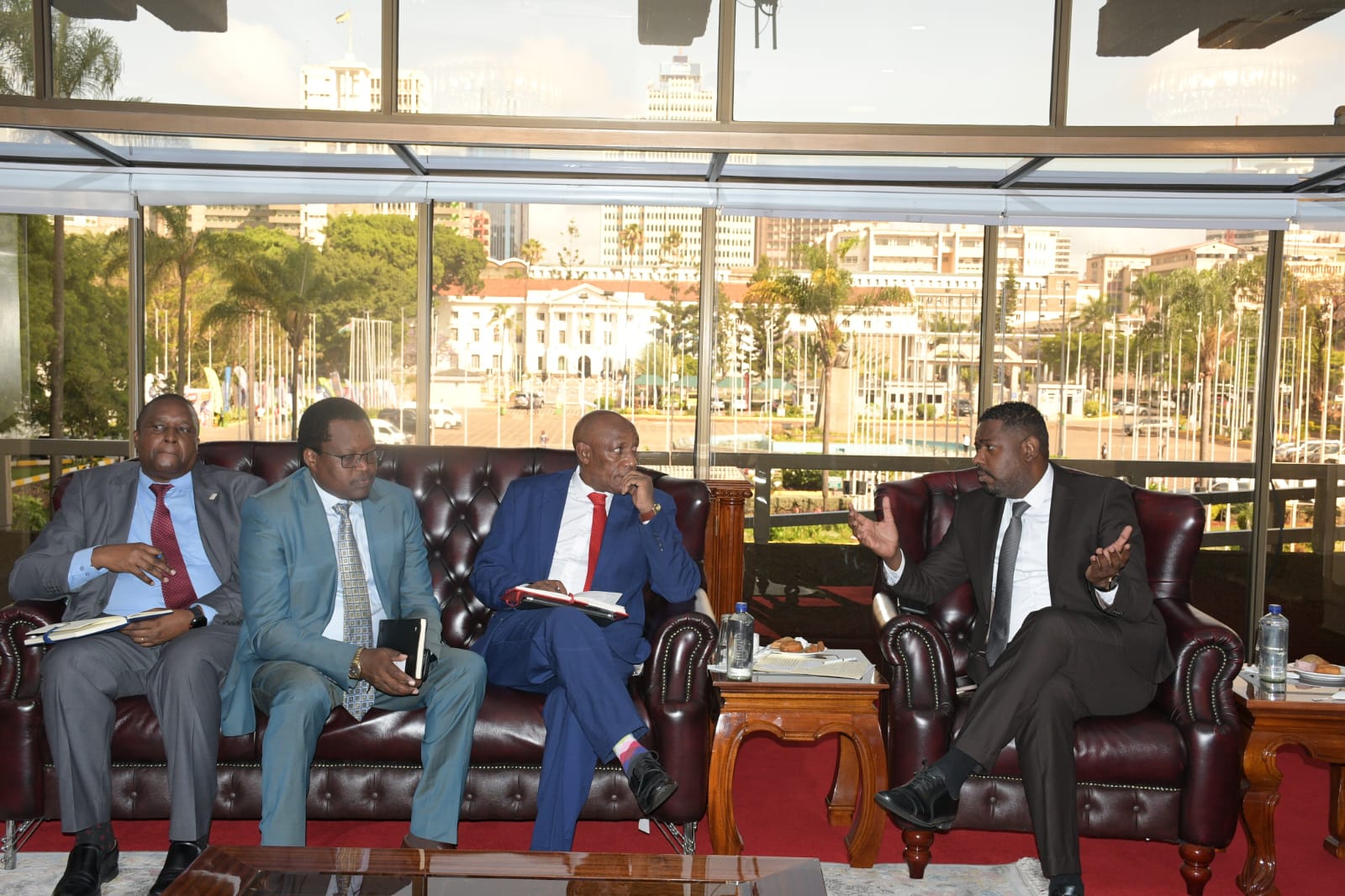
The State Department for Investment Promotion, in partnership with the World Bank and major pension sector players, today convened a high-level dialogue on the establishment of the Green Investment Fund (GIF). The meeting, chaired by Principal Secretary Abubakar Hassan Abubakar, brought together key institutional investors including the Central Bank of Kenya (CBK) Pension Fund and the Public Service Superannuation Fund (PSSF). Also present was the Kenya Jobs and Economic Transformation (KJET)’s Project Director, Luke Ombara, Invest in Kenya CEO John Mwendwa and Kenya Development Corporation (KDC) Director General Norah Ratemo. The CBK Pension Fund and PSSF who together control more than 50 percent of Kenya’s pension assets expressed strong interest in participating in the fund, signalling growing investor confidence in Kenya’s green transition agenda.
The Green Investment Fund (GIF) is designed as a private sector-led vehicle to mobilize domestic and international capital for climate-resilient investments. Supported by the World Bank through the Kenya Jobs and Economic Transformation (KJET) Project, the fund aims to catalyze long-term financing for sectors such as sustainable transport, agriculture and waste management—key pillars of Kenya’s green growth and job creation strategy.
Through the Kenya Development Corporation (KDC), the government has committed an initial seed investment of USD 40 million, with plans to leverage this to attract an additional USD 160 million from institutional investors and development finance institutions. The ambition is to grow the fund into a billion-dollar investment platform that anchors Kenya’s shift to a low-carbon, resource-efficient economy.
In his opening remarks, PS Abubakar emphasized that the fund will be independently managed and commercially driven to ensure investor confidence. “Kenya has the tools to turn perceived frontier risk into a bankable, investment-grade reality,” he said. “Your capital is not just fuel—it is the ultimate vote of confidence that Kenya is open for strategic, high-impact business.”
The PS underscored the GIF’s alignment with national frameworks including Vision 2030, the Green Economy Strategy and Implementation Plan (2016–2030), the Climate Change Act (2016, amended 2023) and the Kenya Green Finance Taxonomy launched by the Central Bank earlier this year. These frameworks, he noted, provide the policy assurance investors need to commit to sustainable investments.
The CBK Pension Fund and PSSF’s endorsement of the initiative was a key highlight of the dialogue, as the two institutions collectively manage over half of the country’s Ksh 2.5 trillion pension industry. Their interest not only validates the GIF’s structure and investment potential but also sends a powerful signal to other pension funds about the viability of green assets as a stable and rewarding investment frontier.
Prof. Dominic Mwenja, Chairman, CBK Pension Fund reaffirmed the fund’s potential to drive Kenya’s transition to a green economy. “The Green Investment Fund will serve as a catalytic platform that leverages both public and private capital to finance sustainable enterprises while creating jobs and strengthening Kenya’s competitiveness,” he said.
The World Bank’s Global Director for Finance, Competitiveness and Investment, Niraj Verma, also lauded Kenya’s leadership in establishing a blended finance mechanism that aligns with international ESG standards. He reiterated the Bank’s commitment to providing technical support and risk mitigation tools to enhance investor confidence and ensure the fund’s sustainability.
Discussions during the session focused on deepening engagement with pension trustees to secure broader buy-in, exploring specialist fund structures for sectors such as the marine economy and finalizing the fund’s governance framework to safeguard its independence. The GIF’s management structure will include a Fund Board, an Advisory Committee with both public and private representation and an independent Investment Committee comprising financial and climate finance experts.
A competitive selection process for an independent fund manager is already in its final stages, with onboarding expected by December 2025. Once operational, the fund will begin deploying equity and quasi-equity instruments ranging between USD 2 million and USD 6 million per investment, targeting growth-stage enterprises with strong green credentials.
In his closing remarks, PS Abubakar called on pension funds across the country to seize this opportunity and join the movement toward sustainable investing. “Let us form a coalition of the willing—one that demonstrates that Kenya’s pension capital can power not only national development but also global climate action,” he said. “Together, we can create a replicable model for green investment in Africa and beyond.”
With the endorsement from major pension schemes and the World Bank’s support, the Green Investment Fund is poised to become a cornerstone of Kenya’s sustainable finance architecture. The dialogue marked a defining step toward building a robust, investor-led green economy. one that aligns environmental responsibility with financial returns and inspires more institutional investors to take part in shaping a cleaner, more resilient future for Kenya.